One Message for the People, Another for the Establishment?
By C.H.V. Prabhakar Rao, Senior Journalist
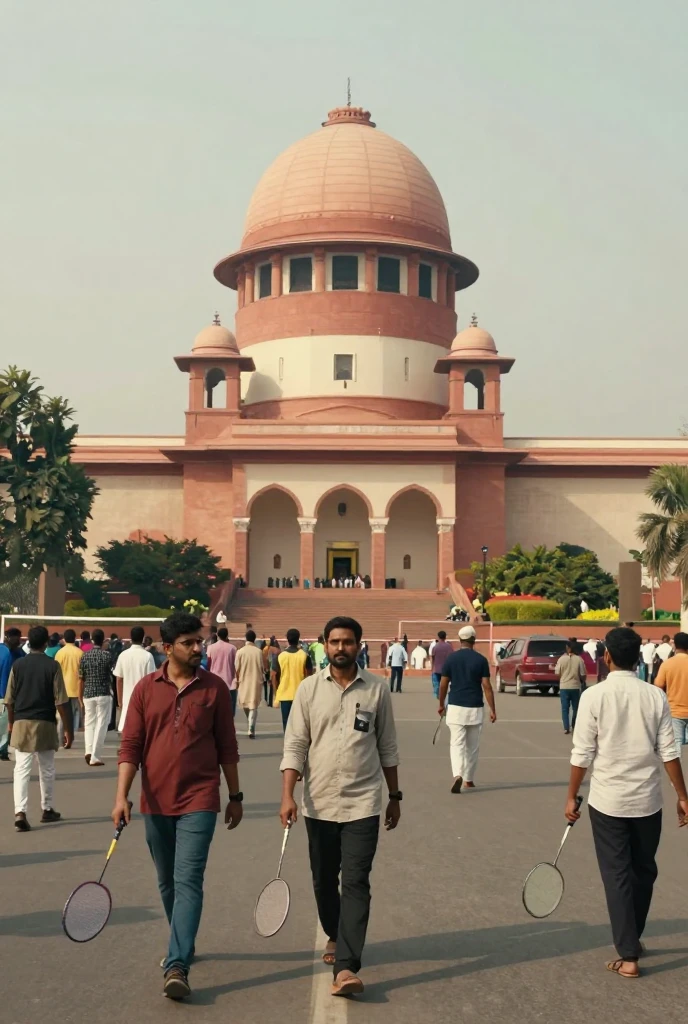
On June 7, 2026, the 2nd International Bar & Bench Badminton Championship held in London may appear, at first glance, to be nothing more than a sporting event. However, the circumstances surrounding it—the personalities involved, the choice of a foreign venue, and the fact that similar events have been organized in successive years—raise a larger ethical question.
The event was organized by Avantika Deka, who has previously conducted badminton tournaments involving members of the Indian judiciary. Reports indicate that she also organized the All India Judges Badminton Championship in 2025. She is widely perceived to enjoy close access to influential political and governmental circles. That tournament reportedly featured the participation of the Chief Justice of India, Justice Surya Kant, Union Ministers Kiren Rijiju and Arjun Ram Meghwal, along with nearly 75 High Court judges from across the country.
The issue here is not badminton. The issue is access to the political vicinity..
India has millions of lawyers and thousands of social, professional, and legal organizations. Yet a private organizer has repeatedly been able to bring together some of the country’s most powerful judges, senior ministers, prominent lawyers, and influential personalities on a common platform. Asking how such access is acquired and sustained is not anti-democratic; it is essential to democratic accountability.

Reports suggest that, besides approximately 75 judges, a number of corporate executives, political figures, and other influential personalities have also been associated with these events. Whether every such report is entirely accurate or not, a legitimate question remains: Why are these gatherings being organized outside India?
The responsibility to answer that question rests not only with the organizers but also with the institutions whose senior representatives participate in them.
The larger question is: Why London?
More Read

India today proudly speaks of Atmanirbhar Bharat, Vocal for Local, and its rise as a global power. The nation is repeatedly told that India is emerging as a model for the world. If that is the case, could such a tournament not have been organized within India itself?
Delhi, Hyderabad, Bengaluru, Mumbai, and Chennai possess world-class sporting infrastructure. Does London offer facilities unavailable in India? Or does the choice of venue symbolize a form of informal networking and back-channel diplomacy that naturally invites public scrutiny?
The tournament reportedly involved an entry fee of around ₹10,000 and prize money of approximately ₹5 lakh to all the three prizes. The larger question is why so many high-ranking individuals found it necessary to travel to London for such an event.
If the intention was to hold a tournament during the summer in a cooler climate, does India not possess numerous hill stations and pleasant-weather destinations capable of hosting an event of this scale?
Yet London was chosen. The explanation may be “international prestige.” But who is discussing the foreign exchange expenditure associated with such prestige?
Citizens are frequently advised to practice financial discipline. They are told that subsidies impose a burden on public finances, that welfare spending must be carefully managed, and that national resources should be used prudently. When the same system appears to encourage or endorse prestigious overseas gatherings, directly or indirectly, what message are ordinary citizens expected to take from it?

For a typical Indian family, an overseas trip remains a once-in-a-lifetime aspiration. For sections of the political, judicial, and corporate elite, however, foreign conferences, meetings, and sporting events increasingly appear to be routine. This is not merely an economic gap; it reflects a widening psychological distance between governing institutions and the people they serve.
The role of the judiciary in this context is especially sensitive.
Judges must not only be impartial; they must also be seen to be impartial. Public confidence in the judiciary rests upon that principle. When citizens repeatedly see judges, senior politicians, influential lawyers, corporate leaders, and government functionaries sharing exclusive social spaces, questions are bound to arise. This is not an accusation against any individual. Rather, it is a recognition that public trust depends not only on actual integrity but also on visible transparency.
That brings us to the central question:
When political leaders preach austerity to the public, when the judiciary seeks public confidence in its independence, and when institutions proclaim their commitment to promoting India’s growth and self-reliance, what message is being conveyed when prestigious events involving these very institutions are held abroad?
This is not a debate about badminton. It is a discussion about the distance that must exist between power, influence, and institutional independence. It is not merely a question about one tournament.
It is a question about whether those who occupy positions of authority still remember a fundamental truth of democracy: The people are watching.